
Journal29 June 2026
Heart Rate Variability, Somatic Experiencing, and Signs of Nervous System Recovery
A reflection on heart rate variability, Somatic Experiencing, and anxiety, and how healing can sometimes be seen in the quiet return of capacity, flexibility, confidence, and everyday life.
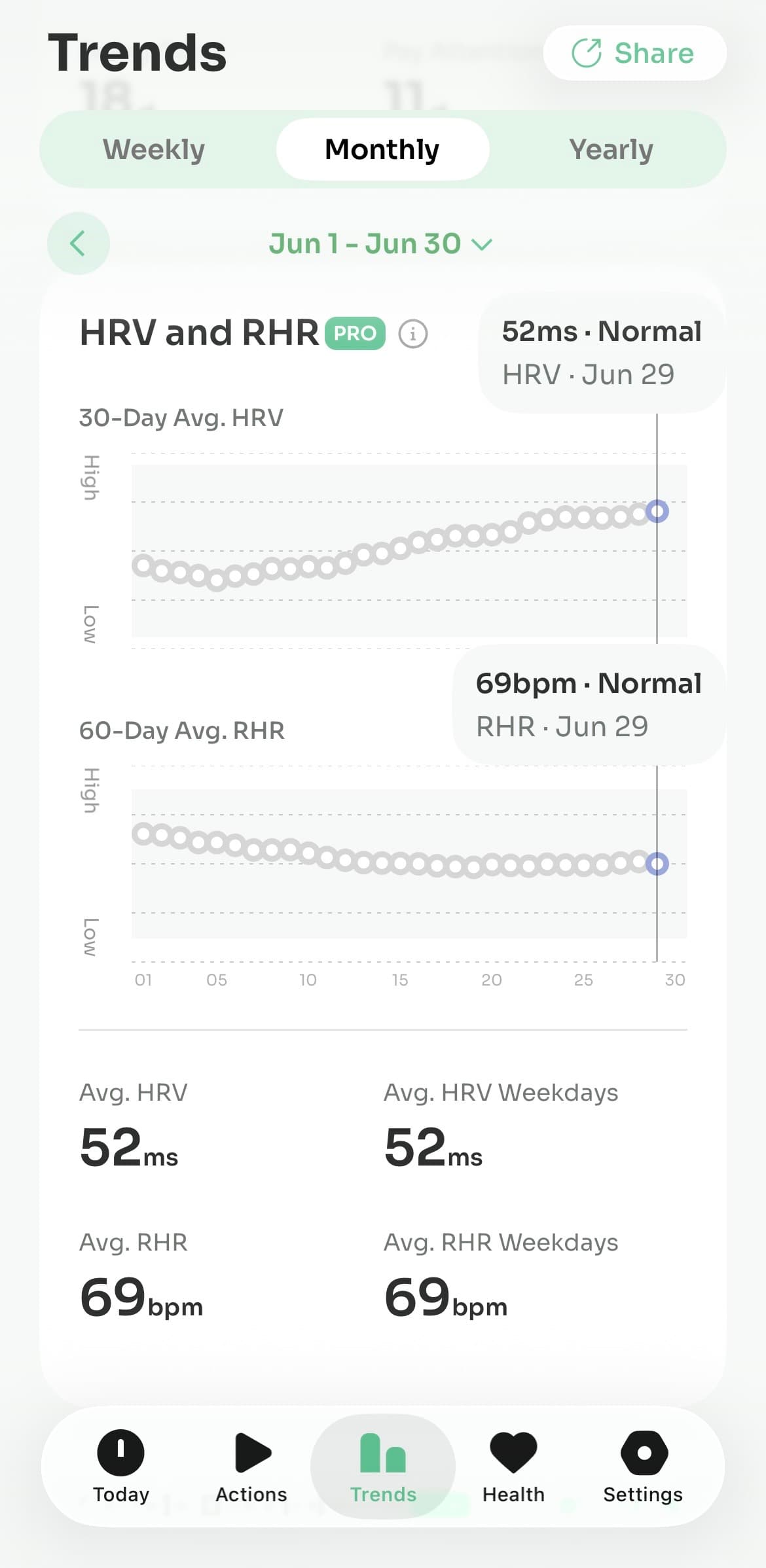
When my client first shared her HRV readings with me, I realised I needed to understand more about what HRV actually means and how it might relate to somatic work.
HRV means heart rate variability. It refers to the tiny variation in time between heartbeats. A healthy nervous system does not beat like a metronome; it flexes, adjusts, and responds to life. A higher HRV is often understood as one possible sign of greater autonomic flexibility. This means the body may have more capacity to move between activation, rest, stress, recovery, and engagement.
This reminded me of Peter Levine’s description of an optimal nervous system as one that is both relaxed and alert. From a Somatic Experiencing perspective, regulation is not about being calm all the time. It is about having access to enough safety and enough energy to meet life at every turn. The nervous system can rest, but it can also respond. It can activate when needed, and it can return to non activation with ease.
When a nervous system has been shaped by trauma or prolonged stress, it may begin to respond to present-day experiences through old patterns of protection. This can show up as anxiety, fear, shutdown, overwhelm, conflict, or difficulty settling, even when the current situation is not as dangerous as the body feels it to be.
All of this helped me think about HRV as one possible window into nervous system capacity. When the body has more flexibility, it may be able to move through stress, excitement, social engagement, effort, and recovery with more ease. In somatic language, this is not simply relaxation. It is aliveness, responsiveness, and capacity.
HRV is not a diagnosis, and wearable devices cannot tell the whole story. HRV can be affected by many things, including sleep, exercise, illness, hormones, medication, alcohol, stress, and the accuracy of the device being used. So I would not see HRV as a stand-alone measure of healing.
However, when placed alongside a client’s lived experience, it can offer a meaningful point of reflection.
In this case, what felt significant was not simply that the number changed. It was that my client was doing more, engaging more, and living more, while also appearing to recover more quickly from stress and activation. In Somatic Experiencing language, this may suggest increased nervous system capacity.
Somatic Experiencing tends to work gradually over time. Rather than forcing the nervous system to confront too much too quickly, it supports small, manageable experiences of sensation, emotion, movement, settling, and completion of interrupted responses. Over time, these small shifts may build more capacity in the system.
This is why progress can sometimes appear quietly. A person may not notice one dramatic change, but they may begin to realise they are recovering faster, feeling less overwhelmed, sleeping after stress, driving further, going out more, or feeling more able to participate in life. From an Somatic Experiencing perspective, these are important signs. The nervous system may still activate, but it may have more room to move, respond, and return.
Image
Shared with permission. A monthly view of one client’s HRV trend over time, offered as a reflection on nervous system capacity rather than a clinical measure.